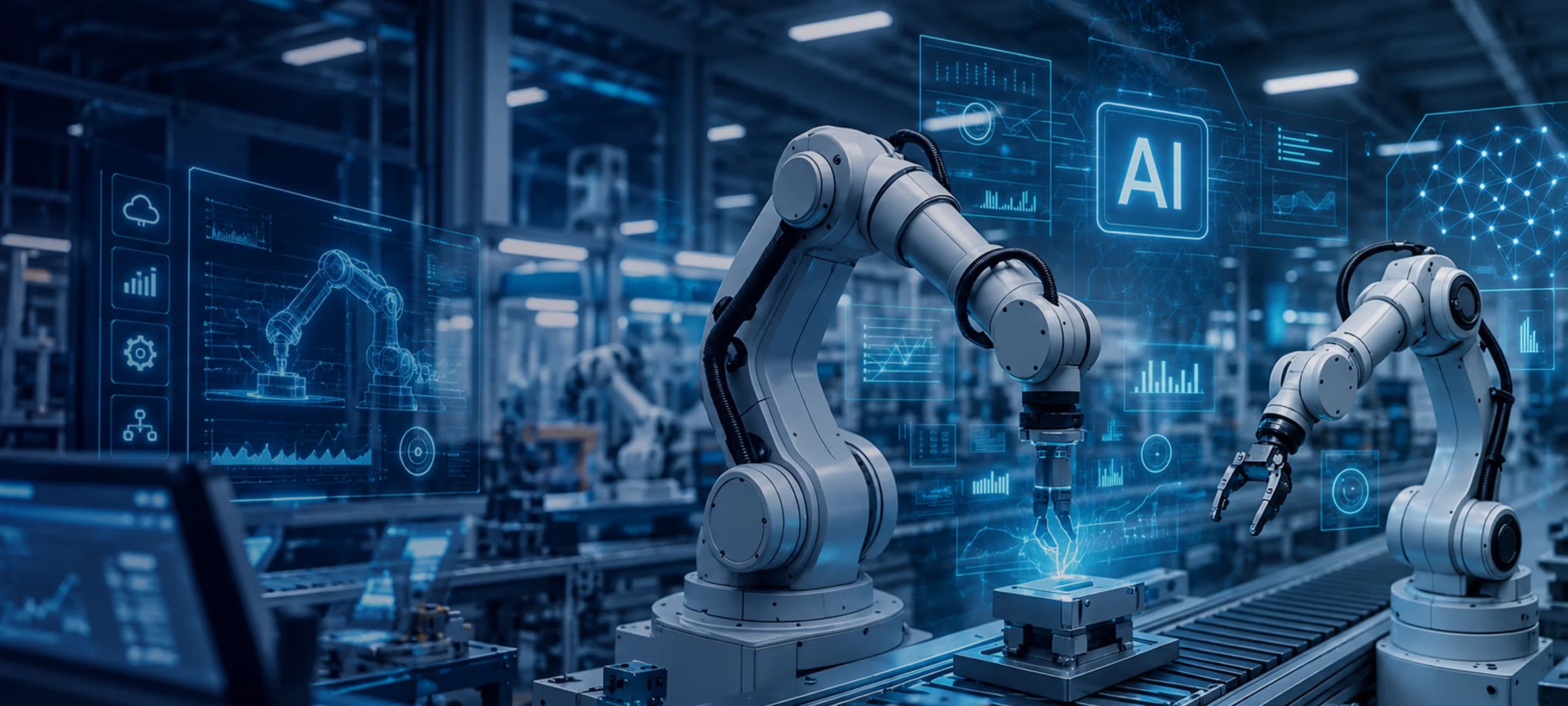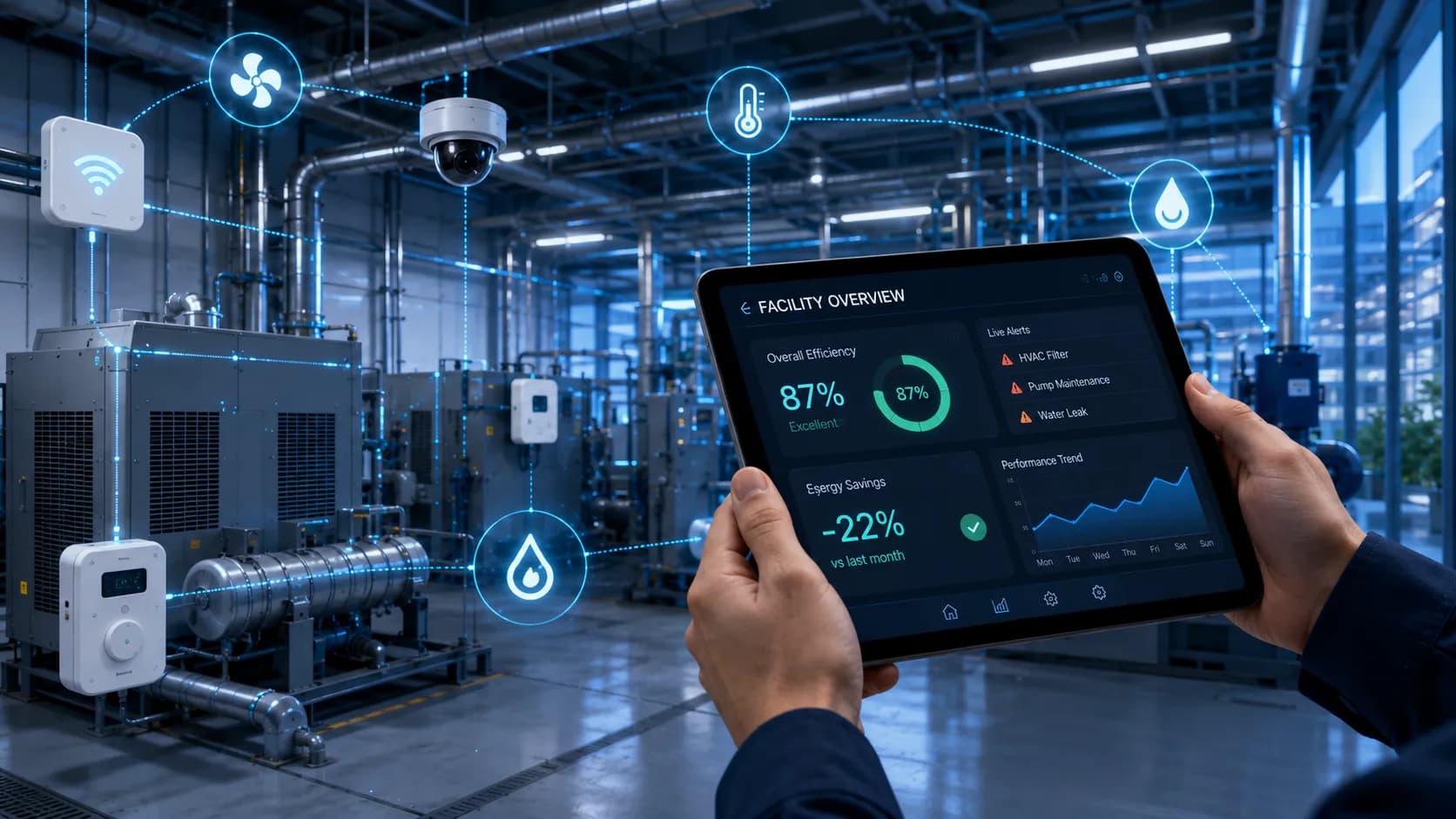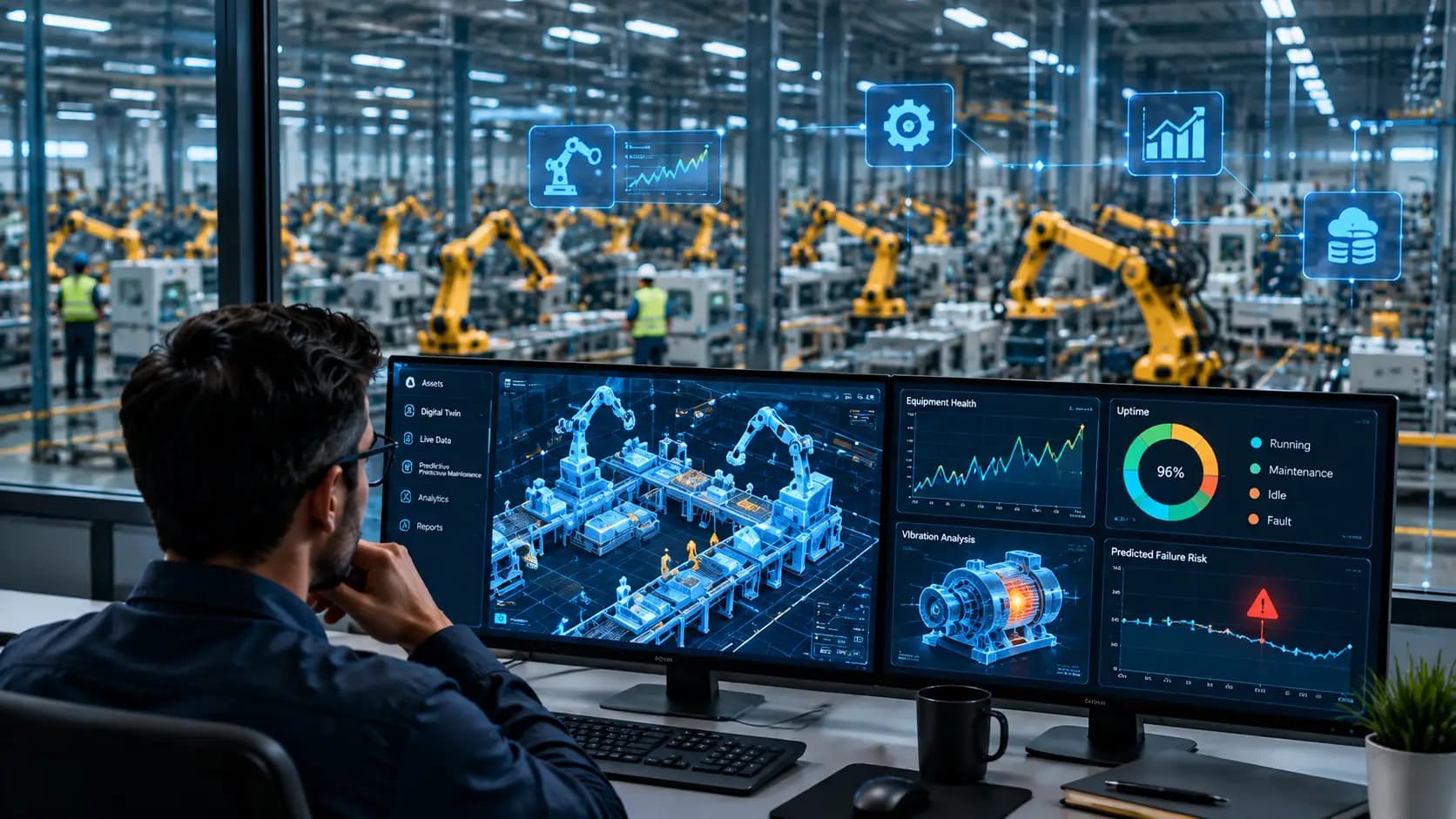
Unplanned downtime costs the average manufacturer roughly $260,000 an hour, according to Aberdeen Research, with automotive lines running well past $2 million an hour once a critical station goes down. Most of that cost is preventable, but only if a plant can see a failure coming before it happens.
For some of you who don't already know, a digital twin is a live, data-fed virtual model of a production line, physical asset, or facility. It stays synchronized with the real thing through sensor and IoT data, so it reflects the current condition of the physical asset.
That distinction matters more in 2026 than it did five years ago. Now, there are cheaper sensors, more mature industrial AI, and cloud infrastructure that are built for real-time data. They have moved digital twins from a simulation exercise into an operational tool tied directly to predictive maintenance.
In this article, we will look at how digital twins actually work in manufacturing environments, what's slowing their adoption for many enterprises, where they deliver measurable value in predictive maintenance, and how technology leaders can evaluate whether their operations are ready for one.
Key Takeaways
-
Unplanned downtime costs manufacturers roughly $260,000 an hour on average, and automotive lines can exceed $2 million an hour, making it the primary financial driver behind digital twin adoption.
-
A digital twin is a live, continuously updated virtual model synced to a physical asset through sensor data, distinct from a static 3D model or a simulation built on assumed inputs.
-
Predictive maintenance is the leading digital twin application in manufacturing because it delivers the fastest, most measurable ROI compared to other use cases.
-
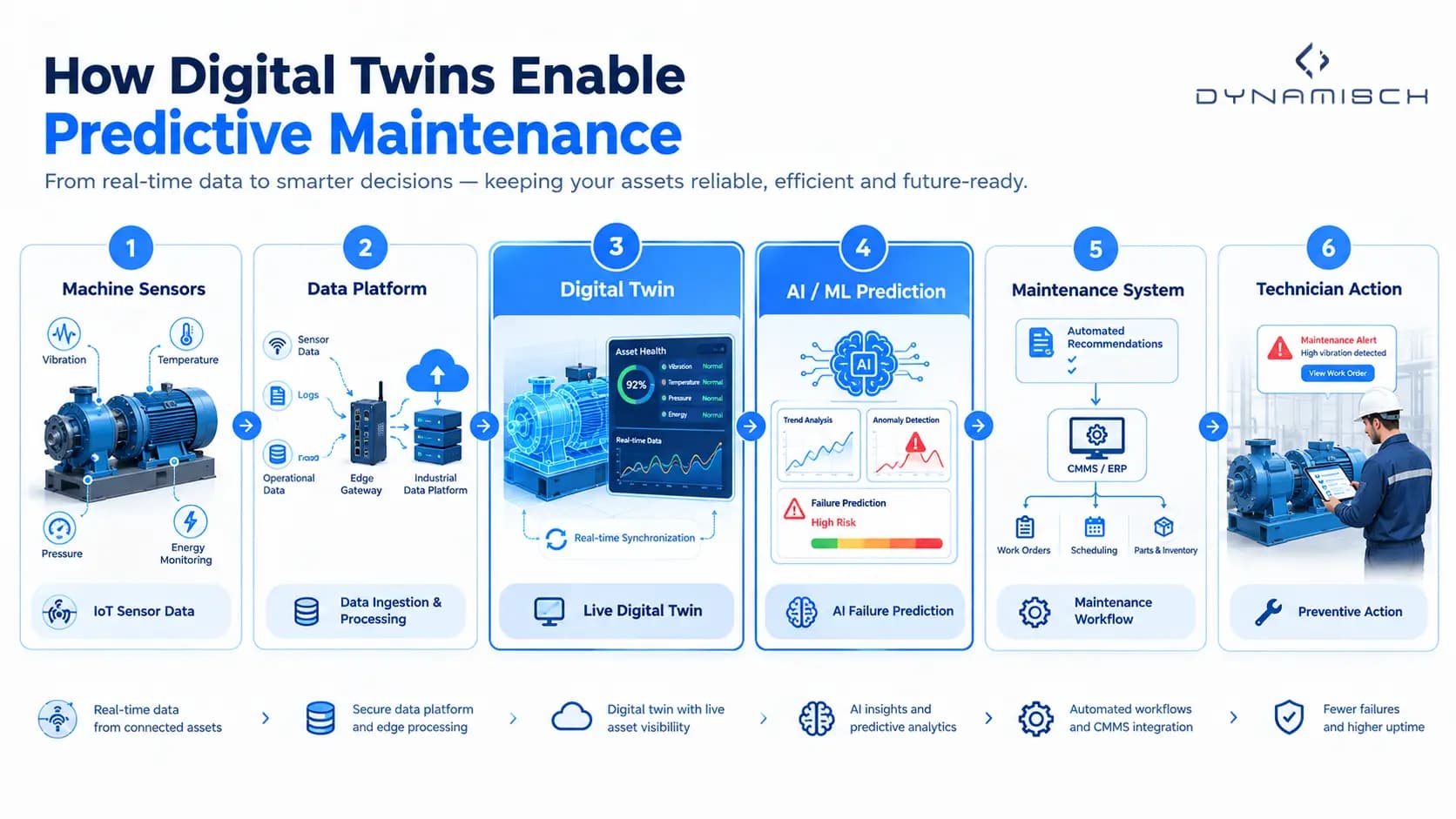
Digital twins enable predictive maintenance through four layers: IoT sensor data, real-time synchronization, machine learning failure prediction, and closed-loop integration with CMMS and ERP systems.
-
Adoption stalls more often due to data silos, legacy OT systems, talent gaps, and unclear ROI ownership between IT and operations than due to the technology itself.
-
Manufacturing digital twin costs range from $30,000 for a single asset to $2 million or more for a full facility, with predictive maintenance twins typically paying back in 12 to 18 months.
-
Emerging developments, including agentic AI, edge AI, Digital Twin as a Service, and digital thread convergence, are expanding what digital twins can do beyond real-time monitoring.
-
The most effective programs start narrow, prove ROI on one high-value asset or line, then scale across facilities using MLOps and governance.
What Is a Digital Twin in Manufacturing?
A digital twin is a live virtual model of a physical asset, product, or process, kept in sync with its real-world counterpart through continuous data exchange.
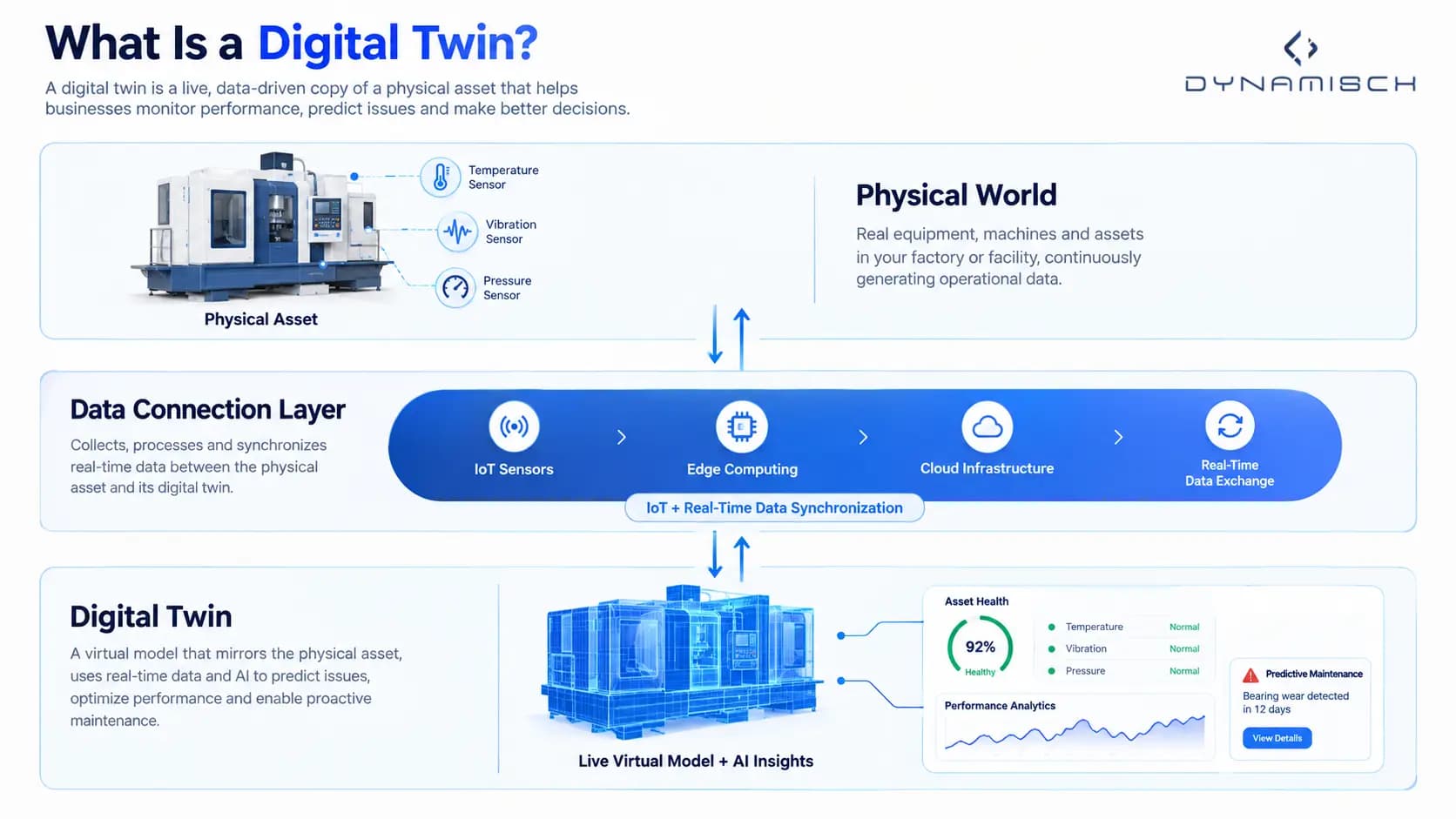
The Digital Twin Consortium defines it precisely as a virtual representation of real-world processes and entities, synchronized at a specified frequency and fidelity. In manufacturing, that synchronization is what turns a digital twin from a design artifact into an operational tool.
Digital Twin vs Simulation vs 3D Model
These three terms are used interchangeably, and that's where most of the search confusion comes from. Let's clear up the confusion between Digital Twin, Simulation, and 3D Model in a simple way.
-
3D Model: A 3D model is a static visual representation. It looks like an asset but does not carry operational data.
-
Simulation: It runs a scenario using historical or assumed inputs. It's useful for planning, but it doesn't reflect what's happening on the floor right now.
-
Digital Twin: A digital twin ingests live data from the physical asset and updates continuously. It reflects the current state of the asset, not a snapshot or a hypothesis.
The difference between these three models matters because it's possible vendors sometimes market static 3D visualizations as digital twins. Without real-time data synchronization, it's a model, not a twin.
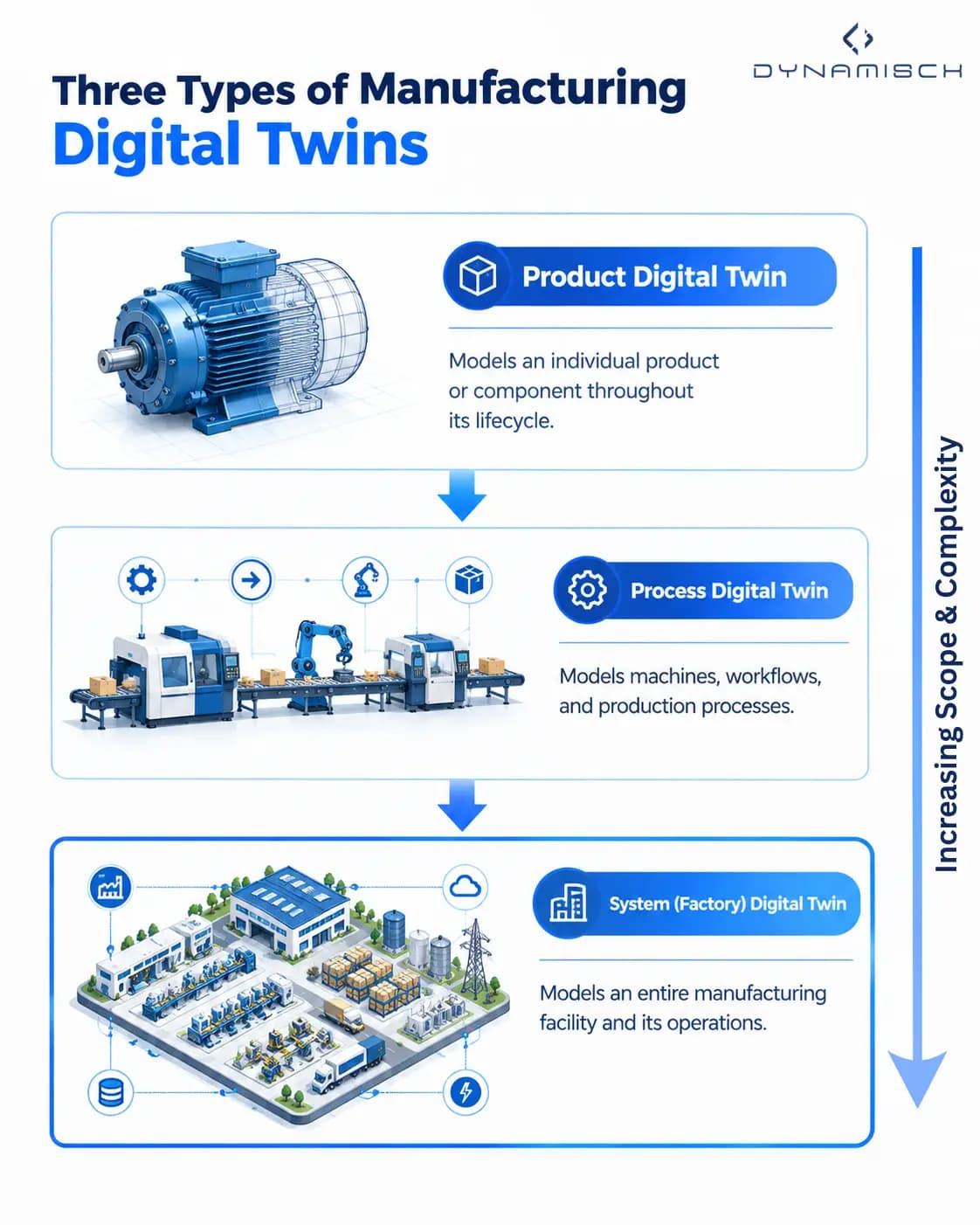
The Three Core Types: Product, Process, and System (or Factory) Twins
Siemens categorizes industrial digital twins into three levels (Product, Production, and Performance). It's a framework widely adopted across manufacturing with a slightly different nomenclature:
-
Product Digital Twin: Product twins model an individual product or component across its lifecycle, from design through field performance.
-
Process Digital Twin: Process twins model how manufacturing machines, materials, and workflows interact across a production line.
-
System Digital Twin: System (or performance) twins model a network of assets or an entire facility, capturing how individual lines and systems affect overall output.
It is worth starting predictive maintenance programs at the process level before scaling toward full system twins.
Why Digital Twins Matter Now: Market Growth and Industry 4.0 Momentum
Digital twin budgets are shifting from pilot projects to production deployments. The reason behind this shift is straightforward: manufacturers have run enough proof-of-concept twins to know where the return actually shows up. It shows up in maintenance.
Predictive Maintenance Is the Leading Application Segment
Ask any plant manager which digital twin use case gets funded first, and the answer is rarely product design or virtual commissioning. It's maintenance.
A process twin that can flag a bearing wearing out three weeks before failure pays for itself faster than almost any other industrial AI investment. This is because the alternative, reactive repair after a breakdown, is measured in the hundreds of thousands of dollars per hour discussed earlier in this article.
That's why predictive maintenance keeps pulling ahead of other digital twin applications when manufacturers set priorities. It has measurable and clear outcomes, like longer asset life, fewer unplanned stops, and maintenance teams that plan work instead of reacting to it.
Industry 4.0 Maturity Is Now Measured by Data, Not Just Automation
A decade ago, Industry 4.0 maturity meant how many automated stations and robots a plant had installed. That's no longer the benchmark.
A fully automated line that can't tell you why a machine failed or predict when the next one will isn't more mature than a semi-automated line with a working digital twin and clean sensor data feeding it.
Real Industry 4.0 maturity today is about whether a plant's IoT connectivity, data infrastructure, and AI models can turn raw machine signals into decisions before a human has to intervene.
How Digital Twins Enable Predictive Maintenance in Manufacturing
Predictive maintenance works because a digital twin gives engineers a continuously updated picture of asset health rather than a snapshot from the last scheduled inspection.
The shift from periodic checks to continuous visibility is what separates a modern predictive maintenance digital twin from traditional condition monitoring.
Sensor and IoT Data Ingestion
Everything starts with data coming off the physical asset. Temperature probes, vibration sensors, power draw meters, and pressure gauges feed a constant stream of operating conditions into the twin.
Industrial IoT infrastructure has to be built to handle this reliably: intermittent connectivity on the plant floor, high-frequency data, and legacy machines that weren't designed to be networked in the first place.
Getting this layer right is less glamorous than the AI model on top of it, but it's where most digital twin projects actually succeed or fail.
Real-Time Synchronization Between Physical Assets and Virtual Models
A twin is only as useful as its freshness. If the virtual model lags the physical asset by hours, it's reporting history, not current state.
Edge AI plays a growing role here, processing data close to the machine so the twin reflects near-real-time conditions without waiting on a round trip to the cloud for every reading.
AI and Machine Learning for Failure Prediction
Once the twin has clean, current data, machine learning models trained on historical failure patterns can flag anomalies before they become breakdowns.
This is where predictive analytics turns raw sensor noise into an actual maintenance decision: not just "something changed," but "this bearing is likely to fail within a defined window."
Closed-Loop Feedback into Maintenance and Operations Systems
This is the final piece, often the most overlooked. A prediction only has value if it reaches the maintenance team's workflow.
Digital twins that connect to ERP systems and CMMS can automatically trigger work orders. They close the loop between detection and action rather than leaving insight sitting in a dashboard that nobody checks until it's too late.
Download the whitepaper "Digital Twin in Industrial Systems" for a deeper technical breakdown.
Business Challenges Slowing Digital Twin Adoption in Manufacturing
Technology failure is hardly the reason many manufacturers abandon digital twin initiatives. Instead, these initiatives stall because the surrounding organization isn't ready for them.
Data Silos and Legacy OT Systems
Plant floors often run on equipment installed long before anyone thought about connecting it to a cloud platform. PLCs, SCADA systems, and machine controllers from different eras and different vendors rarely speak the same protocol.
Before a digital twin can ingest anything useful, someone has to solve the unglamorous problem of getting operational technology data out of isolated systems and into a format modern data engineering pipelines can actually use.
This groundwork is invisible to executives but consumes a large share of early project timelines.
High Upfront Integration Cost
Edge infrastructure, sensors, cloud compute, and the engineering time to wire it all together add up before a single predictive maintenance alert ever fires.
For plants deciding between a smart factory digital twin and other major investments, the high upfront cost and delayed payoff make it harder to get budget approval.
Talent Gaps in AI, IoT, and Industrial Data Engineering
Few internal teams have people who understand both applied machine learning and plant operations. That combination, industrial domain knowledge plus AI infrastructure expertise, is scarce, and it's often the real bottleneck behind delayed rollouts.
Unclear ROI Ownership Between IT and Operations
Digital twin programs frequently stuck in the gap between departments. IT owns the infrastructure, while operations owns the outcome. Projects lose momentum after the pilot phase when no one owns the business case end-to-end.
The Cost of Not Adopting Digital Twins
Standing still has a price, even when nothing has broken yet. Plants without a predictive maintenance digital twin still face the same $260,000-an-hour downtime exposure discussed earlier.
They find out about failures just after they happen instead of before. Root-cause diagnosis takes longer without live process data, which stretches every unplanned stop into a longer one.
The competitive gap shows up further out too. Manufacturers using digital twin technology for virtual commissioning can test and validate new lines before physical build-out begins, cutting time-to-market on new products.
Competitors still relying on physical trial-and-error commissioning are working a step behind, launching later and paying more to find problems on the factory floor instead of in the model.
Enterprise Opportunities and Competitive Advantages
The business case for digital twins in manufacturing isn't theoretical anymore. It shows up in four places most operations leaders already track.
Reduced Unplanned Downtime and Maintenance Cost
This is the most direct return. A predictive maintenance digital twin catches degradation before it becomes a failure, which means less overtime labor, fewer emergency repairs, and equipment that runs closer to its full-service life instead of being replaced early out of caution.
Faster Product and Process Iteration Through Virtual Commissioning
Testing a new line configuration in a digital twin, before a single piece of physical equipment moves, lets engineering teams catch layout and throughput problems early. That compresses the cycle between design and production launch, which matters more in industries where product cycles keep shortening.
Improved Sustainability and Energy Efficiency Reporting
Digital twins give granular, process-level visibility into energy and resource consumption, rather than aggregate data pulled from utility bills. It is something that sustainability teams historically lacked.
That level of detail helps manufacturers identify specific inefficiencies in production and build more credible sustainability reporting, since the data reflects actual operating conditions instead of estimates.
Workforce Training Without Production Line Disruption
Training new operators on live equipment carries real risk and real cost in lost line time. Digital twins paired with XR and spatial computing let workers troubleshoot fault scenarios, practice procedures, and learn equipment behavior in a virtual environment, without touching a running production line or risking a safety incident during onboarding.
Emerging Trends Shaping Digital Twins Beyond 2026
The next phase of digital twin adoption isn't about better visualization. It's about what the twin can do once it has the data.
Agentic AI Layered on Top of Digital Twins
Most digital twins today surface information and leave the decision to a human. That's starting to change.
Agentic AI systems can sit on top of a twin and take bounded actions on their own, scheduling a work order, adjusting a setpoint, rerouting production, within rules an engineering team defines in advance. The twin stays the source of truth about asset condition; the agent decides what to do about it.
Edge AI Reducing Latency for Real-Time Twins
A twin that depends on a round trip to a distant cloud region can't respond fast enough for processes that change in seconds. Running inference at the edge, closer to the machine, keeps the model responsive and cuts the bandwidth burden of streaming raw sensor data offsite continuously.
Digital Twin as a Service (DTaaS) Lowering Entry Cost for Mid-Size Manufacturers
Digital Twin as a Service is a cloud-based subscription model that gives manufacturers the infrastructure and tooling to build and run digital twins without the capital outlay of an in-house platform.
For mid-size manufacturers priced out of custom-built systems, DTaaS is what's making digital twin technology in manufacturing accessible outside large enterprise budgets.
Convergence With Digital Thread and PLM Systems
Digital twins are being connected to the digital thread, the continuous data record spanning a product's engineering, design, and production history, and to PLM systems that manage it.
This means a digital twin does more than show how a machine is working right now. It also includes information about how the machine was designed and how it has changed over time, helping explain why it works the way it does.
How to Start a Digital Twin and Predictive Maintenance Program
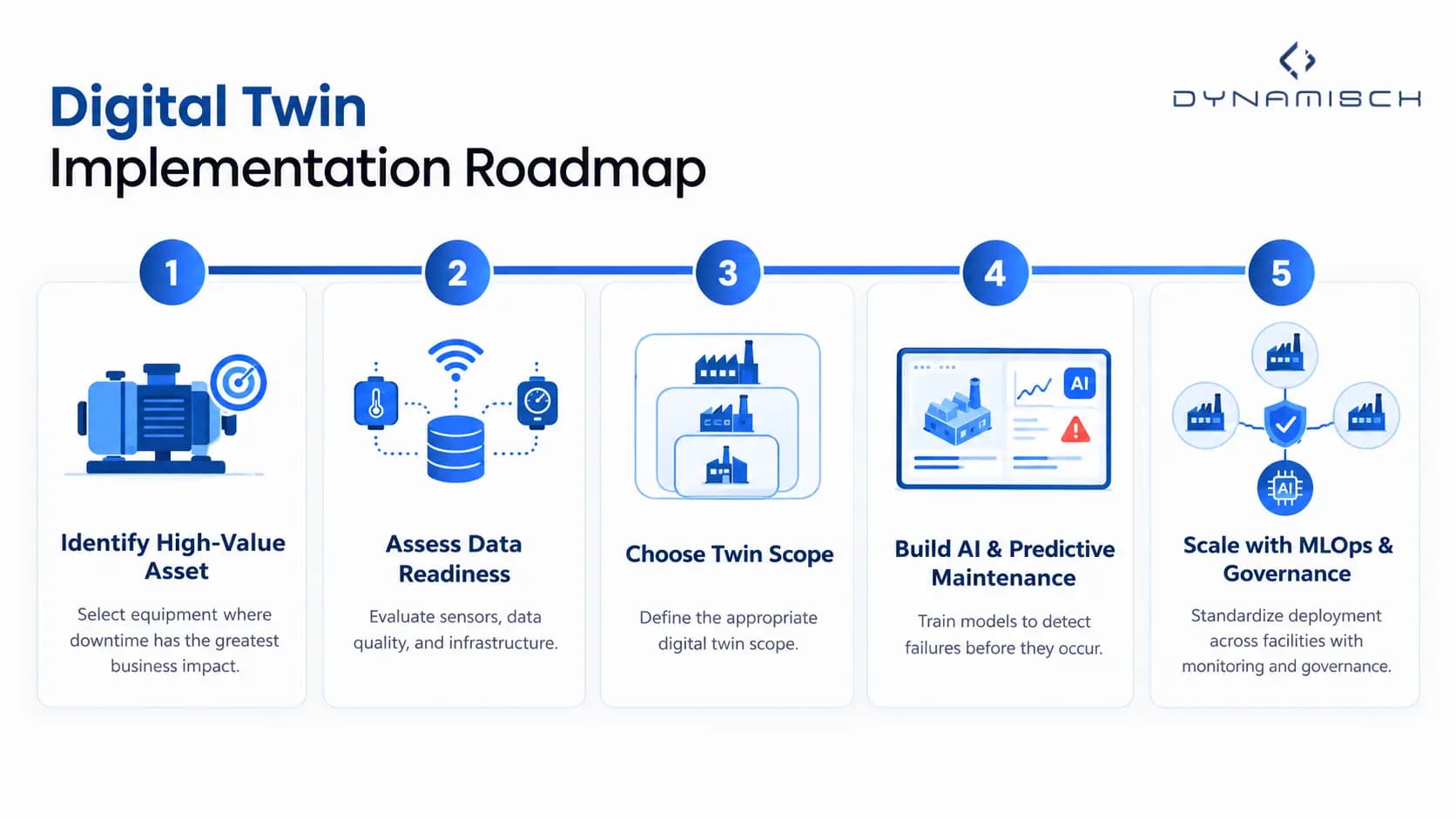
The most important thing to make a digital twin program a success is to start it narrowly for a single physical asset, prove its value, and then expand it with a facility-wide rollout.
-
Step 1: Identify a High-Value Asset or Production Line
Start with the equipment where downtime hurts the most, an asset with a history of unplanned failures, a critical machine, or a line where a stoppage cascades through the rest of the plant.
This is where a predictive maintenance digital twin has the clearest path to measurable ROI and the easiest case to make internally.
-
Step 2: Assess IoT and Data Infrastructure Readiness
Before scoping the twin itself, take stock of what data actually exists. Is the data flowing anywhere usable, or trapped in a proprietary controller? Are there sensors on the asset already, or does instrumentation need to be added?
This audit determines the real cost and timeline, and it's where data engineering work typically needs to happen before anything else can move forward.
-
Step 3: Choose Component, Process, or System Twin Scope
Match the twin's scope to the problem. A single critical component might only need a component-level twin. A process constraint involving multiple machines interacting probably needs a process twin. Save full system twins for later phases, once the organization has experience managing a smaller one.
-
Step 4: Build the AI and Predictive Maintenance Layer
With clean data flowing, machine learning models can be trained to detect early failure signatures specific to that asset.
This step benefits from close collaboration between data scientists and the engineers who understand how the equipment actually fails, since domain knowledge shapes which signals matter.
-
Step 5: Scale Across Facilities with MLOps and Governance
Once the first twin proves out, scaling to other lines or plants requires MLOps discipline: monitoring for model drift, version control for models, and governance around who can act on the twin's outputs.
Without this layer, each new twin becomes a one-off project instead of a repeatable capability.
Conclusion: Building Industry 4.0 Around Predictive Intelligence
If you are thinking that the most automated manufacturers are the ones who are pulling ahead in Industry 4.0, then that's not always the case. They're the ones who know what's going to break before it breaks.
That shift, from reacting to machine failures to predicting them, is the real milestone behind the digital twin story, more than any single sensor deployment or dashboard.
Getting there means treating digital twins in manufacturing as an operational capability built on real-time synchronization, solid IoT data, and AI models tuned to your specific assets, not a one-time software purchase.
If you're evaluating where a predictive maintenance digital twin fits into your operations, that assessment usually starts with a conversation with an experienced team about your current data infrastructure and where downtime is costing you the most.
Frequently Asked Questions

Sanket Prabhu
Vice President of Engineering
As Vice President of Engineering at Dynamisch, Sanket Prabhu stands at the intersection of Generative AI, Spatial Computing, and enterprise-scale innovation. With over 15 years of experience driving innovation across AI, XR, IoT, Digital Twins, and Gaming, he transforms emerging technologies into high-growth business engines. His leadership reflects both technical depth and strategic precision.