
Many XR environments look impressive visually but lack the cognitive structure needed for effective decision-making. Data is placed in 3D spaces without clear spatial logic, user interactions go unanalyzed, and valuable behavioral insights remain hidden. The result is poor usability, reduced adoption, slower decisions, and immersive experiences that fail to deliver measurable business value.
What Is a Cognitive Environment?
A cognitive environment is any digital or physical-digital space such as an XR application, spatial computing platform, digital twin interface, or smart facility designed to support human decision-making, reduce cognitive overload, and generate measurable intelligence from user interactions.
The cognitive environment includes three layers:
Layer 1:
Spatial Analytics
The data layer. We capture movement patterns, attention signals, interaction events, and spatial behavior to understand how users engage with immersive and physical-digital environments.
Layer 2:
Cognitive Design
The architecture layer. We apply cognitive design principles, spatial memory theory, and UX methodologies to organize information and interactions for faster, more accurate decision-making.
Layer 3:
Intelligence Output
The action layer. Behavioral and spatial data are transformed into operational insights, training metrics, safety indicators, and decision-support intelligence that integrates with enterprise workflows.

Spatial Analytics & Cognitive Services

Immersive Analytics Platform Development
We build immersive analytics platforms that transform complex operational data into interactive 3D environments for faster analysis and decision-making.

Spatial Behavior & Data Analytics
Behavioral analytics systems capture movement patterns, navigation behavior, interaction events, and spatial engagement across immersive environments.

Cognitive Load Optimization
We design information architectures that reduce cognitive overload, improve information retention, and support faster, more accurate user decisions.

3D Spatial Data Visualization
Complex datasets are transformed into interactive 3D visualizations that improve situational awareness, exploration, and operational understanding.

Eye Tracking & Attention Analytics
Eye tracking systems measure attention patterns, focus areas, and user engagement to optimize experiences and improve decision effectiveness.

Cognitive Environment Architecture
We design cognitive environments using behavioral science, spatial memory principles, and human-centered design methodologies to improve usability.

XR Learning Analytics & Effectiveness
Learning analytics platforms measure user performance, knowledge retention, engagement, and training effectiveness across immersive learning environments.
Industries We Serve
We help organizations transform spatial interactions into measurable intelligence that improves decisions, usability, safety, and operational outcomes.

Manufacturing
Spatial analytics improves operator training, workflow optimization, equipment interaction analysis, and decision-making across industrial environments.

Healthcare
Cognitive environments support clinical training, medical visualization, user behavior analysis, and improved learning outcomes in healthcare settings.

Construction
Behavioral analytics and immersive visualization improve safety training, site planning, operational awareness, and workforce performance.

Smart Facilities
Spatial intelligence platforms help optimize occupant experiences, facility navigation, operational efficiency, and environment utilization.
Our Spatial Analytics Approach

01 Discovery & Cognitive Audit
We assess user workflows, information architecture, spatial interactions, and decision-making challenges to identify optimization opportunities.

02 Cognitive Architecture Design
Our teams design spatial environments using cognitive science, UX principles, and behavioral insights to improve usability and decision quality.

03 Analytics Instrumentation
We instrument environments to capture interaction events, movement patterns, attention data, and behavioral signals across spatial experiences.

04 Build & Cognitive Validation
Spatial environments are developed and validated through usability testing, behavioral analysis, and cognitive performance measurements.

05 Deploy, Measure & Optimize
We continuously monitor user behavior, measure outcomes, and optimize environments to improve engagement, efficiency, and decision-making.
Discovery & Cognitive Audit
We assess user workflows, information architecture, spatial interactions, and decision-making challenges to identify optimization opportunities.
01
Discovery & Cognitive Audit
02
Cognitive Architecture Design
03
Analytics Instrumentation
04
Build & Cognitive Validation
05
Deploy, Measure & Optimize
Is Your XR Environment Actually Working for Users?
We design spatial environments that reduce cognitive load, collect behavioral intelligence, and improve the decisions your teams make inside them.

Spatial Analytics & Cognitive Tech Stack
We use spatial computing, behavioral analytics, and cognitive intelligence technologies to create measurable and data-driven immersive environments.

Unity

Unreal Engine 5

Varjo XR

Meta Quest Platforms
Varjo Eye Tracking

Pupil Labs

Tobii XR

Fove

HTC VIVE Pro Eye
Unity Analytics

Custom Telemetry SDK's

InfluxDB

Azure Spatial Anchors

D3.js 3D

deck.gl

Cesium

NVIDIA Omniverse (OpenUSD)

Custom WebGL Visualization

TensorFlow

PyTorch

OpenAI APIs

Real-time adaption engines

Nielsen Norman Group Frameworks

Cognitive load Measurement Tools

UX Heuristic Evaluation

Power BI

Grafana

Custom XR Dashboards

REST APIs

Heart rate variability Sensors

Galvanic skin Response

Presence Questionnaire Scoring
Unity
Unreal Engine 5
Varjo XR
Meta Quest Platforms
Varjo Eye Tracking
Pupil Labs
Tobii XR
Fove
HTC VIVE Pro Eye
Unity Analytics
Custom Telemetry SDK's
InfluxDB
Azure Spatial Anchors
D3.js 3D
deck.gl
Cesium
NVIDIA Omniverse (OpenUSD)
Custom WebGL Visualization
TensorFlow
PyTorch
OpenAI APIs
Real-time adaption engines
Nielsen Norman Group Frameworks
Cognitive load Measurement Tools
UX Heuristic Evaluation
Power BI
Grafana
Custom XR Dashboards
REST APIs
Heart rate variability Sensors
Galvanic skin Response
Presence Questionnaire Scoring
Success Stories
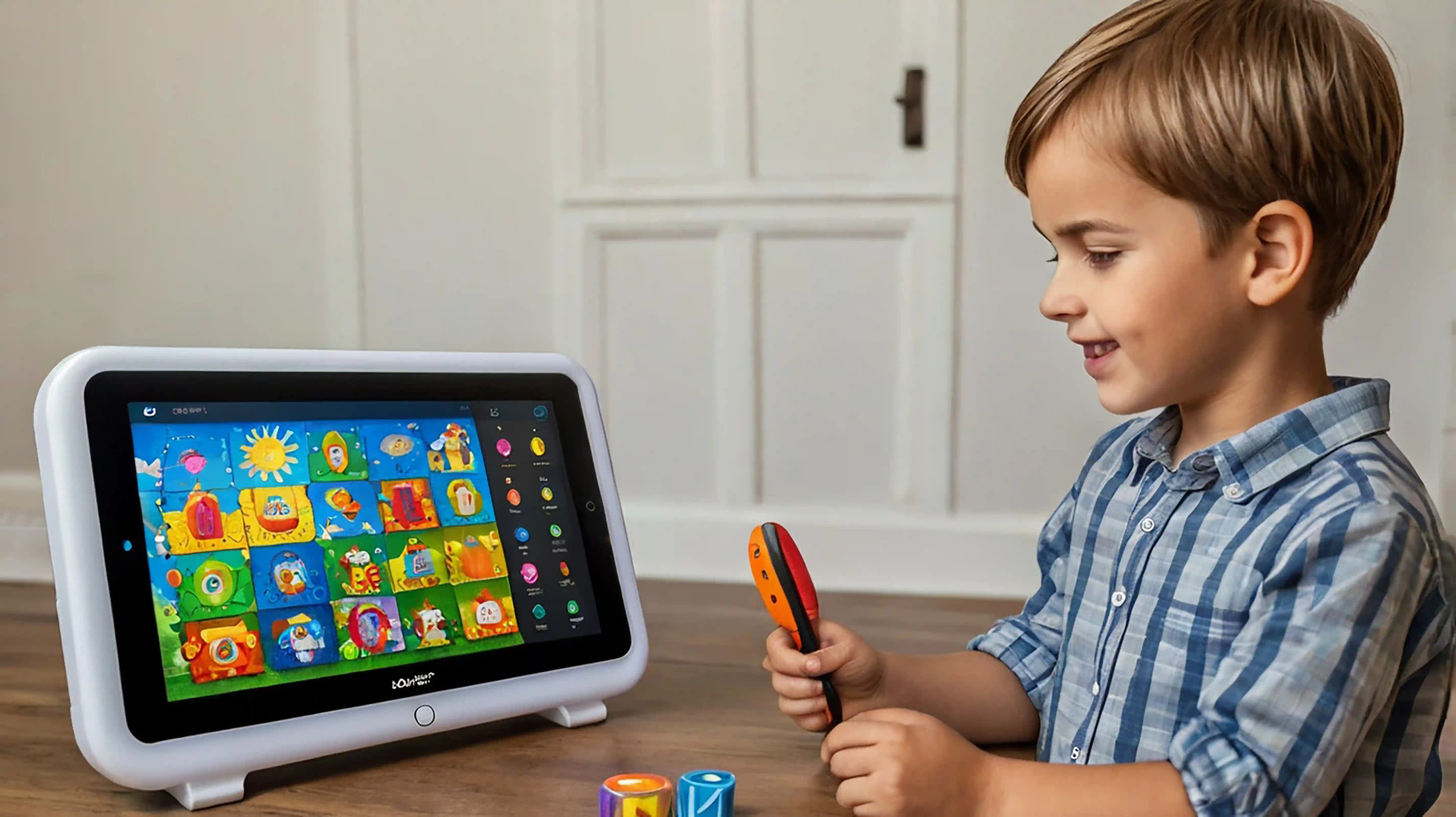
AI-Assisted Learning Platform for Neurodiverse Children (Autism to ADHD)
Dynamisch engineered an adaptive learning platform designed specifically for children with Autism and ADHD. By combining behavioral science frameworks, gamified learning experiences, and personalized engagement models, the platform improves focus, encourages skill development, and enables caregivers to track learning progress through data-driven insights.
01 / 04
Why Choose Dynamisch
Dynamisch designs cognitive environments that transform spatial interactions into measurable intelligence. We combine behavioral analytics, cognitive design principles, AI-driven adaptation, and immersive technologies to help organizations improve decision-making, engagement, training effectiveness, and operational outcomes.

Cognitive
Environment Expertise

XR Behavioral
Analytics Capability

AI-Driven
Spatial Adaptation

Design to
Intelligence Delivery
Related Insights
View All Insights Blog
Blog12 min readSep 30, 2026
What Is a Global Capability Center (GCC)? Why Companies Are Building Them in India
What is a Global Capability Center? Learn the GCC meaning, models, and why 2,117 GCCs now operate in India, backed by 2026 Nasscom-Zinnov data.
Global Capability CenterGCCGCC IndiaBuild-Operate-Transfer
 Blog
Blog15 min readSep 23, 2026
The Integration Wall: Why Most AI Pilots Never Reach Production
Most AI pilots don't fail on models; they fail at integration. Here's the engineering reality behind the 95% failure rate and how to break through.
AI PilotsEnterprise AIAI IntegrationMLOps
 Blog
Blog10 min readSep 14, 2026
Digital Twins in Manufacturing: How Predictive Maintenance Is Powering Industry 4.0
Digital twins cut unplanned downtime and drive Industry 4.0 maturity. See how manufacturers use predictive maintenance to protect uptime and margin.
Digital TwinsPredictive MaintenanceIndustry 4.0Manufacturing Technology
Frequently Asked Questions about Spatial Analytics & Cognitive Environment
01
What is Immersive Analytics and How Is It Different from Traditional Analytics?
Immersive analytics presents data within interactive 3D environments, allowing users to explore information spatially. Unlike traditional dashboards, it improves context, engagement, and decision-making through natural interaction.
02
How Do You Measure the Effectiveness of an XR Training Environment?
Training effectiveness is measured using completion rates, task performance, attention patterns, decision accuracy, retention scores, behavioral analytics, and user engagement data collected during XR experiences.
03
What Behavioral Data Can You Collect from XR Environments?
XR environments can capture movement patterns, navigation paths, gaze and attention data, interaction events, task completion metrics, engagement levels, and user decision-making behavior.
04
Can Spatial Analytics Integrate with Our Existing Business Intelligence Systems?
Yes, spatial analytics platforms can integrate with BI tools, enterprise applications, data warehouses, and operational systems to combine spatial insights with existing business intelligence workflows.
05
Which Industries Benefit Most from Cognitive Environment Design?
Manufacturing, healthcare, construction, education, defense, and smart facilities benefit from cognitive environments that improve training outcomes, operational efficiency, safety, and decision-making.
06
How Does Cognitive Environment Design Improve User Decision-Making?
Cognitive environments organize information using behavioral science, spatial memory principles, and UX best practices to reduce cognitive overload and help users make faster, more accurate decisions.