
Global Capability Centers have been around for years, but what companies expect from them has changed considerably.
Earlier, companies often set up an offshore center for a simple business reason. They wanted a larger workforce, lower costs, and a place to handle repeatable work efficiently.
That is still part of the equation, but it is no longer the whole story.
Today, companies use GCCs to build software and develop products. They also run data platforms, support finance operations, strengthen cybersecurity, experiment with AI, and conduct R&D from GCCs. In many cases, these teams work on the same products and business problems as their colleagues at headquarters.
According to the FY2026 Nasscom-Zinnov GCC Landscape Report, India has 2,117 GCCs across 3,728 units. Together, they employ about 2.36 million professionals and generate $98.4 billion in revenue.
The report found that 96 percent of GCCs established after FY2021 started with a clear product or portfolio mandate. This marks a major shift from the execution-focused offshore model of a decade ago.
So what exactly is a GCC, and why are so many companies investing in one now?
Key Takeaways
- A GCC is company-owned, not outsourced. A Global Capability Center is an operation a company establishes in another country, hiring employees directly and retaining ownership of the people, IP, and capabilities, unlike outsourcing, where a third-party vendor owns delivery.
- India is home to 2,117 GCCs generating $98.4 billion in revenue. According to the FY2026 Nasscom-Zinnov GCC Landscape Report, these centers run 3,728 units. They employ about 2.36 million professionals.
- New GCCs launch with strategic mandates from day one. About 96 percent of GCCs established after FY2021 started with a clear product or portfolio mandate. This is a major change from the execution-focused offshore model used a decade ago.
- AI has become a core GCC function. More than 1,200 GCCs in India now use AI and machine learning capabilities. Over 250 AI Centers of Excellence and 250,000 AI professionals support them.
- A total of 506 Forbes Global 2000 companies already operate GCCs in India. Since FY2021, the number of GCCs in the country has grown by about 32 percent. This growth shows that the ecosystem is mature, not emerging.
- A GCC doesn't need thousands of employees to be effective. Many GCCs begin with a team of 50 to 100 people focused on product engineering, QA, and data. As they grow, they expand into cybersecurity, AI, and full platform ownership.
- The most common GCC setup models are self-build, BOT, and SOH/turnkey. In the Build-Operate-Transfer model, a partner builds and stabilizes the operation. Then they hand it over to the parent company. Setup-Operate-Handover and turnkey models provide different levels of setup and operational support.
- The real GCC question isn't cost; it's ownership. Companies should build a GCC only when there is clear long-term demand. They should also define what the center will own over the next three to five years. Building one just because competitors are doing so is rarely a good reason.
First, What Is a GCC?
A Global Capability Center (GCC) is an offshore or nearshore facility that a company sets up in another country. It is also called a Global In-house Center (GIC). Some people call it a captive center. The company owns and operates it as part of its own organization.
Unlike outsourcing, the company hires the employees directly and retains ownership of the people, intellectual property, and business capabilities developed there.
The important part is ownership.
If a US company hires an external technology provider in India to build an application, that is outsourcing. The vendor owns the delivery, manages its own staff, and typically serves other clients alongside this one.
In the GCC model, the company sets up its own legal entity in India and hires engineers directly. Those engineers become part of its global technology organization and take responsibility for building and maintaining the application. The people, the knowledge they build, and the decisions they make belong to the company, not to a third party.
This distinction matters because the company isn't simply buying a service. It is building a capability that it intends to retain and grow over time.
GCC Meaning in Simple Terms
There is no single template for what a GCC looks like. It could be a lean engineering team of a few dozen people. Or it could be an operation with thousands of people. These people work in technology, operations, finance, cybersecurity, analytics, and R&D.
Size and scope depend entirely on what the parent company decides the center should own.

What Actually Happens Inside a GCC?
What a GCC does depends heavily on the company and the industry it operates in.
A bank's GCC might have teams working on different tasks. It could be payments, risk analytics, fraud detection, cybersecurity, regulatory technology, and internal banking platforms.
A healthcare company might use its GCC for digital health products, data engineering, cloud platforms, analytics, and operational support.
A SaaS company's GCC is usually more engineering-focused. Its teams often handle product development, DevOps, quality engineering, AI, and customer-facing technology.
This is one of the reasons the GCC conversation has moved beyond "offshoring." The work being done in these centers is becoming much closer to the core business.
Common GCC functions now include:
- Software and product engineering
- Cloud infrastructure and cybersecurity
- Data engineering and data science and analytics
- Finance, procurement, and business operations

GCCs also play a growing role in sectors such as manufacturing, automotive, healthcare, and semiconductors. These sectors use GCCs for engineering and R&D, work that once stayed close to headquarters.
AI is becoming another major part of the picture. According to the FY2026 Nasscom-Zinnov GCC Landscape Report, over 1,200 GCCs in India use AI and machine learning. These efforts are backed by over 250 AI Centers of Excellence and 250,000 AI professionals.
The report says AI has moved beyond experimentation in GCCs. These centers now use AI across internal operations, products, and customer-facing offerings. The focus is shifting to AI governance and making AI cost-effective at scale.
For enterprises weighing whether a GCC belongs in their strategy, this shift matters. The question is no longer just which functions to move offshore. Companies must also decide which functions are strategic enough to own instead of outsourcing to a vendor.
Why Build a GCC Instead of Simply Outsourcing?
This isn't really an either-or decision.
Most large organizations use a mix of internal teams, GCCs, consultants, technology partners, and managed service providers. The question isn't which model wins. It's which model fits a given piece of work.
The difference comes down to what the company wants to own.
Imagine a company needs a new customer platform. Working with a technology partner may be the quickest and most practical way to build it. This is especially true when time is limited, or the project scope is well defined.
But if that platform becomes central to the company's business, the organization may want its own team. That team may include product managers, engineers, architects, data specialists, and security staff.
That's where a GCC starts to make sense.
Over time, the company builds knowledge internally rather than having all of it sit with external vendors. The same applies to product decisions, intellectual property, architecture, and specialist skills, the things that compound in value the longer a team owns them.
This doesn't make outsourcing less useful. Companies need to decide which capabilities are strategic enough to build in-house. The partners can handle the rest, including offshore development models that do not require a full captive operation.
GCC vs Outsourcing at a Glance
A global capability center differs from outsourcing primarily in ownership: a GCC is a company's own entity with directly hired talent, while outsourcing relies on a third-party vendor managing shared resources across multiple clients.
| Factors | Outsourcing | GCC |
|---|---|---|
| Ownership | Third-party vendor | Company's own entity |
| Talent | Vendor-managed, shared across clients | Direct hires, dedicated to the company |
| IP & knowledge | Sits with vendor | Retained internally |
| Best for | Defined scope, non-core work | Strategic, ongoing capability |
Neither column is inherently better. A company evaluating a GCC setup should use this table, one function at a time. It should not make a company-wide decision. This is because many enterprises end up running both models side by side.
Why India?
India has become the world's largest GCC destination, and cost is obviously one of the reasons. But explaining India's GCC growth purely through cost misses much of what has happened over the last decade.
India has developed a very large technology ecosystem.
Companies can hire for software engineering, cloud, and enterprise apps. They can also hire for cybersecurity, AI, data, finance, and product development too. Many roles are in the same city. Some roles share the same talent pool.
There is also already a mature GCC community in the country. As of FY2026, 506 Forbes Global 2000 companies have GCC operations in India.
That means a company entering India today isn't testing an entirely new operating model. It is entering an ecosystem that already includes thousands of global operations, technology companies, startups, consulting firms, universities, and service providers. It's the kind of density that shortens hiring cycles and makes specialist talent easier to find.
India's GCC count itself has grown by around 32 percent since FY2021, according to the Nasscom-Zinnov GCC Landscape Report 2026.
More importantly, the nature of those centers is changing.
Today's GCCs often start by focusing on product, engineering, AI, or data work. Offshore centers set up 15 or 20 years ago were less likely to start this way. Their focus has shifted from cost-driven back-office work to core business capabilities. Companies now assign these strategic responsibilities from day one instead of waiting years to build trust.
That shift changes what "setting up a global capability center" actually means for a company evaluating India today. It's less a question of finding a cheaper capacity. Now, it's more a question of finding the right ecosystem to build a capability the company intends to keep.
A GCC Doesn't Have to Start with Thousands of Employees
This is another misconception worth addressing.
When people hear "GCC," they often think of large banks or Fortune 500 firms. They may picture thousands of staff in Bengaluru, Pune, Hyderabad, or Chennai.
That is one version of the model, but it isn't the only one.
A company could start with a focused team of 50 or 100 people. The initial mandate might cover product engineering, QA, data engineering, and cloud operations. Once those teams are established and working effectively with the global organization, additional capabilities can be added in sequence:
- Core engineering and QA, proving the team can deliver against global standards
- Cybersecurity, as trust and integration with headquarters deepen
- AI and analytics, once the foundational functions are stable
- Full ownership of a product or platform, as the center matures
This phased approach reflects how India's GCC ecosystem itself is evolving. Newer centers are rapidly launching with a defined product or portfolio mandate from the outset. They no longer grow gradually from cost-driven back-office work. It's a shift that favors smaller, purpose-built teams over large, undifferentiated ones.
What matters is not how large the GCC is on day one. What matters is whether there is a clear reason for building the capability and a plan for how it will develop.

Where Companies Can Get GCCs Wrong
Setting up the legal entity and hiring people is only part of the work.
One of the bigger risks is treating the GCC as a separate offshore delivery team. If all major product decisions stay at headquarters, the GCC becomes an execution team. Without decision-making responsibility, it is difficult for the center to become a true capability hub. It stays a delivery arm indefinitely, regardless of how skilled the team is.
Leadership matters here. The local team needs enough context and authority to make decisions. Global leaders also need to treat the GCC as part of the organization, not as an external supplier. This approach influences everything from architecture decisions to how quickly the center responds to changing priorities.
Talent is another challenge. India has a large workforce, but companies are competing for experienced engineers, AI specialists, architects, cybersecurity professionals, and product leaders.
Simply having access to a large talent market doesn't automatically mean the right people will be easy to hire. Demand for AI and ML talent in particular has intensified as more centers build out AI-focused mandates from inception.
There are also practical questions around:
- Governance and decision rights between headquarters and the local team
- Security and regulatory requirements specific to the industry and geography
- Infrastructure and technology enablement
- Compensation benchmarking against a competitive local market
- Culture and how the center integrates with the global organization
- Retention, once the initial hiring push is over
These are better addressed while designing the GCC than after the organization has already started scaling. A company that treats them as setup choices can often build a working capability hub faster. It does not treat them as problems to fix later.
How Do Companies Get Started?
There are several ways to approach GCC setup. The right way depends on the company's timeline, experience, and appetite for owning the process directly.
Companies with significant experience in India may choose to establish everything themselves, handling entity registration, hiring, compliance, and infrastructure in-house. Others prefer to work with a partner during the initial setup. This is especially common when they are opening their first operation in the country.
In a Build-Operate-Transfer (BOT) model, a partner sets up the operation and builds the initial team. The partner also manages it during the early stages. Once the GCC reaches an agreed level of maturity, the partner transfers it to the parent company. The company then takes full ownership and management.
Other approaches, such as Setup-Operate-Handover (SOH) or turnkey models, provide different levels of support. It depends on how much of the initial setup the organization wants to manage itself versus hand off entirely.
There isn't one model that works for everyone.
A 500-person GCC for a global bank has very different requirements from a 75-person engineering center for a growing US technology company. The bank must focus on governance, phased hiring, and regulatory compliance. The technology company may prioritize hiring product and QA talent quickly.
GCC Setup Models at a Glance
| Model | Best For |
|---|---|
| Self-build | Companies with existing India experience |
| Build-Operate-Transfer (BOT) | Companies wanting a partner to build and stabilize before full ownership |
| Setup-Operate-Handover (SOH) / Turnkey | Companies wanting variable levels of setup support |
The starting point should therefore be the business requirement, not the operating model.
Does Your Company Actually Need a GCC?
This is probably the more useful question.
A company shouldn't build a GCC simply because other companies are doing it. There needs to be enough long-term demand to justify building an internal capability. Following competitors alone is not a good reason.
For a company considering India, a few questions are worth discussing internally:
- Are engineering or technology hiring constraints slowing down growth?
- Is the company heavily dependent on external vendors for technology that is becoming strategically important?
- Are there products, data capabilities, platforms, or business functions the company would prefer to own?
- Is there enough ongoing work to support a dedicated team rather than a series of projects?
And maybe most important: if the company builds a GCC today, what should that center own in three to five years?
If there isn't a good answer to that last question, it may be too early. If there is, the discussion changes. It is no longer about the headcount or cost. Instead, it is about the capabilities the company wants to own over the long term.
The GCC Model Is Changing
India's $98.4 billion GCC market is large. It employs 2.36 million GCC professionals. This shows it is already a major part of the global business landscape.
But headcount and market size aren't necessarily the most interesting numbers.
The bigger development is the type of work moving into these centers. Engineering, AI, product development, data, cybersecurity, R&D, and global functional leadership are becoming more common GCC responsibilities. These are the categories that would have sat almost entirely at headquarters a decade ago.
That changes the business case.
A GCC can still provide cost and scale advantages.
But for many companies, its long-term value comes from building a pool of talent and skills. This stays in the organization. It can take more ownership of the global business. This is better than knowledge locked inside a vendor relationship.
That is ultimately what separates a capability center from simply another delivery location.
Building a GCC With Dynamisch
Dynamisch works with organizations looking to establish and scale GCC operations in India. We help through models including Build-Operate-Transfer (BOT), Setup-Operate-Handover (SOH), and turnkey GCC engagements.
The work can cover early GCC strategy and setup. It also includes talent, technology enablement, operations, governance, and final handover. It draws on the same forward deployed engineering approach Dynamisch uses. This approach embeds teams inside client organizations, not as a distant vendor.
The goal isn't simply to help a company establish an India office. It is to build a center that can become a productive part of the global organization. As it grows, the center can take ownership of more strategic capabilities.
Thinking about establishing a GCC in India? Get in touch with Dynamisch to understand the different ways to get started.
Frequently Asked Questions
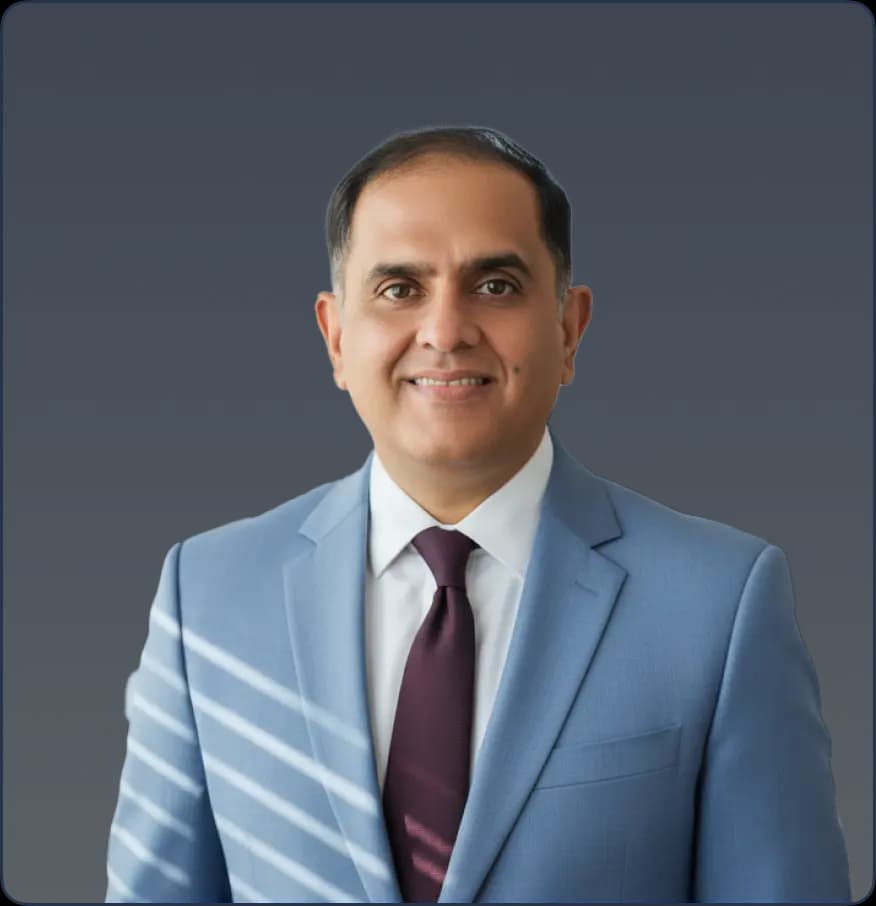
Manoj Juriasinghani
Chief Strategy Officer
As Chief Strategy Officer at Dynamisch, Manoj drives the company's vision through strategic insight, enterprise collaboration, and a focus on delivery excellence. With more than 28 years of experience in technology leadership and global operations, his career showcases a proven record of establishing Global Capability and Delivery Centers (GCCs/GDCs), scaling high-performing teams across geographies, and leading digital transformation initiatives for global enterprises.