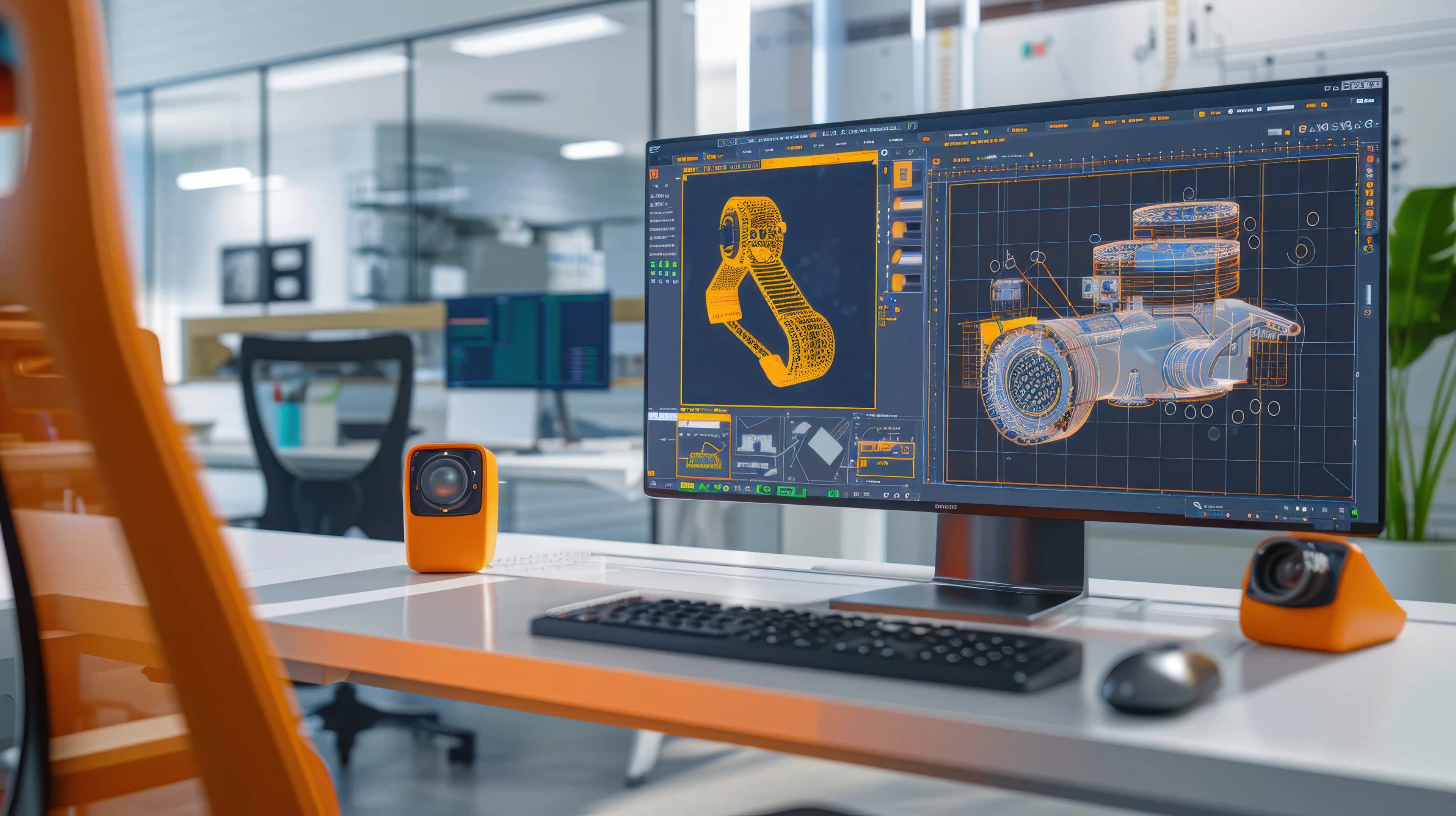
AI-Assisted Automation for 3D Pipe Design in Vehicle Chassis
Intelligent CAD Automation
CAD Automation
AI-Assisted Design Generator
Aug 23, 20255 min read
Client Background
Global Agricultural Vehicle Manufacturer
A leading tractor manufacturer producing agricultural machinery for global markets needed to modernize part of its product engineering workflow. One of the critical design tasks in vehicle development involves routing hydraulic, fuel, and fluid pipes through the chassis. These pipe networks must fit within tight structural spaces while satisfying strict engineering constraints such as bend radius, component clearance, and connection compatibility. As product complexity increased and development cycles shortened, the company sought to automate parts of the pipe routing design process to improve efficiency and reduce engineering effort.
Industry
Manufacturing & AutomotiveTechnology
AI Frontier & DataBusiness Challenges
Manual CAD Workflows Slowing Down Engineering Iterations
Pipe routing inside vehicle chassis traditionally required extensive manual modeling and validation.
Key challenges included:
-
Pipe routing designs were created manually in CAD systems, making the process time-consuming and dependent on specialized engineering resources.
-
Any changes in chassis geometry required engineers to redesign routing paths from scratch.
-
Designs needed to comply with multiple engineering rules such as bend radius limits, clearance from other components, and structural constraints.
-
Engineers had limited ability to explore multiple routing alternatives quickly during the design phase.
These limitations slowed the overall vehicle design cycle and reduced engineering productivity.
Solution Engineered
AI-Assisted Design Generation with Engineering Rule Validation
Dynamisch developed an intelligent pipe routing automation system that combines engineering rules with AI-assisted design generation to accelerate chassis design workflows.
Key capabilities included:
-
Constraint-aware design engine that encodes engineering rules such as bend radius limits, clearance requirements, and connection compatibility to automatically validate pipe routing layouts.
-
AI-assisted routing generation models capable of producing multiple feasible pipe routing paths within the vehicle chassis while respecting spatial and structural constraints.
-
Automated design optimization enabling engineers to evaluate alternative routing configurations and select the most efficient layout.
-
Seamless CAD integration layer that converts generated routing paths into ready-to-use 3D models compatible with existing engineering design tools.
This approach allows engineers to shift from manual modeling toward assisted design exploration.
Business Benefits
Faster Design Iterations and Reduced Engineering Effort
The automated design system delivered measurable improvements in engineering productivity:
-
Significant reduction in manual CAD modeling for pipe routing tasks.
-
Ability for engineers to rapidly generate and compare multiple routing options.
-
Improved routing efficiency through AI-generated design alternatives.
-
Reduced need for repetitive manual validation against engineering rules.
-
Reusable automation framework applicable across multiple vehicle platforms and configurations.
Technology Implemented
-
Open3D
-
PyTorch
-
NumPy
-
Python
Summary
Bringing Intelligent Automation to Mechanical Design
By introducing AI-assisted routing generation and rule-based validation, Dynamisch helped the manufacturer modernize its pipe design process. The system enables engineers to automatically generate and evaluate multiple routing alternatives while maintaining compliance with engineering constraints. This reduces manual design effort, accelerates product development cycles, and improves overall engineering efficiency across vehicle programs.